⏰ Mark Your Calendar!
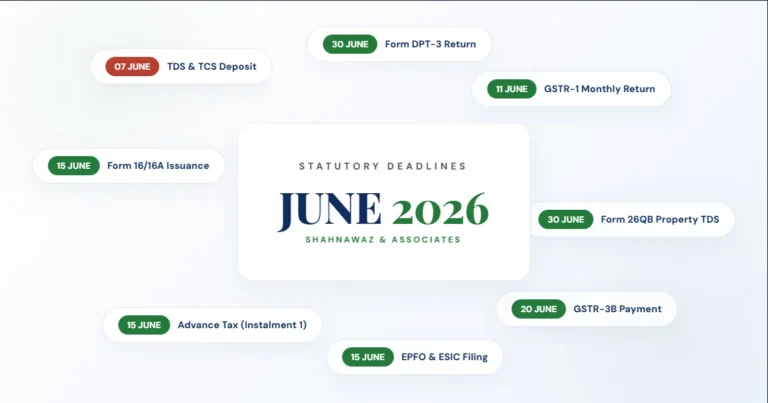
The ITR Filing Due Date for FY 2025-26 (AY 2026-27): For salaried individuals and non-audit cases, the strict deadline is July 31, 2026.
Gone are the days when filing your Income Tax Return (ITR) was just a routine paperwork chore or a quick trick to get a refund. Today, the Income Tax Department tracks nearly every financial move you make using advanced artificial intelligence and highly connected digital systems like the Annual Information Statement (AIS). In fact, hardworking salaried professionals are now the absolute backbone of India's tax system, carrying the heaviest burden by contributing over 53% of all direct tax collections.
Because the government's digital watchdogs are so efficient, relying on outdated "tax-saving hacks" or making even a seemingly innocent mistake can quickly trap you in massive, inescapable penalties.
This guide is your essential, easy-to-read roadmap for the FY 2025-26 tax season. It is specifically designed to help you navigate this new high-tech tax era, steer clear of dangerous financial pitfalls, and maximize your legitimate savings with complete peace of mind.
1. The "TDS Complacency" Trap
Your Employer Doesn't Know Everything
Many salaried people think, "My employer already deducts TDS from my salary every month, so my taxes are fully paid. I just need to file a nil return." This is a massive misconception known as "TDS complacency". Your employer only deducts tax on your salary. They do not know about your side income.
- The Hidden Incomes: You must declare interest from savings bank accounts, fixed deposits, mutual fund dividends, and money earned from freelance or gig work.
- The Advance Tax Rule: If your total tax liability on these extra incomes exceeds ₹10,000 for the year, you are legally required to pay your own "Advance Tax" in installments.
- The Consequence: If you hide this extra income (even accidentally), the tax department views it as "under-reporting" and slaps a flat penalty of 50% on the tax you owe, plus heavy interest.
2. Job Hopping Pitfalls
The Double Exemption Disaster
If you changed jobs during the financial year, you might accidentally fall into the "Dual Exemption" trap. When you join a new company, you are supposed to submit Form 12B to tell your new HR about your previous salary and the TDS already cut by your old boss.
- What Goes Wrong: Many people don't submit this form. As a result, both your old employer and your new employer give you the tax-free basic exemption limit and the flat ₹75,000 standard deduction.
- The Shock: When you file your ITR, the government system combines both salaries and cancels the duplicate benefits. This often pushes you into a much higher tax bracket, resulting in a sudden, massive tax demand of thousands or even lakhs of rupees that you must pay out-of-pocket in July.
3. The High Price of Fabricated Deductions
The Danger of Fake Deductions and Refund Scams
We all want a refund, but chasing illegal refunds through shady agents (who take a 20% to 50% commission) is a recipe for financial ruin. The tax department's AI instantly cross-checks your claims against real-world financial data.
- Fake Rent (HRA) & 80C: Claiming rent just under ₹1,00,000 to avoid giving a landlord's PAN, or claiming ₹1.5 Lakh in 80C without actually buying insurance or mutual funds, will instantly flag your return.
- The Political Donation Scam (80GGC): Some agents ask you to donate money to fake political parties (RUPPs) via bank transfer to get a 100% tax deduction, and then return the money to you in cash. The government has completely cracked down on this. This is classified as deliberate misreporting.
| The Mathematics of Financial Ruin (Example: Evading ₹1,00,000 in Tax) | |
|---|---|
| Actual Tax Deficit | ₹1,00,000 (The original tax evaded) |
| Accrued Interest | ₹36,000 (Interest at 1% per month for a typical 3-year discovery) |
| Late Fees & Fines | ₹68,000 (Applied during the reassessment process) |
| Misreporting Penalty | ₹1,00,000 (A 100% penalty for misreporting; can legally go up to 200%) |
| Total Demand | ₹3,04,000 (You pay more than 3x what you saved!) |
4. The Schedule FA Minefield
The Hidden Danger of Foreign Company Shares
If you work for a Multi-National Company (MNC) and receive shares (ESOPs or RSUs) from the foreign parent company, you hold "Foreign Assets".
You must declare these shares in a specific section of your ITR called Schedule FA (Foreign Assets). Under the Black Money Act, simply forgetting to check this box or fill in the details attracts a flat, non-negotiable penalty of ₹10,00,000 (Ten Lakh Rupees). It does not matter if the shares are only worth ₹5,000 or if you already paid tax on them; the penalty is strictly for failing to report them.
5. Your Safest Path Forward
The New Tax Regime & Corrections
To make life easier and reduce the temptation to fake deductions, the government introduced the New Tax Regime (Section 115BAC). More than 72% of people have already switched to it.
- How it works: You give up common deductions like HRA, LTA, and 80C. In return, the tax rates are much lower, and income up to ₹12,00,000 can effectively be tax-free due to enhanced rebates.
- Retained Benefits: You still get the ₹75,000 standard deduction. You also get full deductions if your employer contributes to your Corporate NPS (up to 14% of Basic + DA).
- Made a mistake in the past? If you realize you faked a deduction or forgot to report income in previous years, don't wait for a notice. Use the Updated Return (ITR-U) facility to voluntarily fix the error and pay the tax. This saves you from the brutal 200% penalties.
| Net Taxable Income Slab (FY 2025-26) under New Tax Regime | Marginal Tax Rate |
|---|---|
| Up to ₹ 4,00,000 | Nil |
| ₹ 4,00,001 to ₹ 8,00,000 | 5% on income exceeding ₹ 4 lakh |
| ₹ 8,00,001 to ₹ 12,00,000 | ₹ 20,000 + 10% on income exceeding ₹ 8 lakh |
| ₹ 12,00,001 to ₹ 16,00,000 | ₹ 60,000 + 15% on income exceeding ₹ 12 lakh |
| ₹ 16,00,001 to ₹ 20,00,000 | ₹ 1,20,000 + 20% on income exceeding ₹ 16 lakh |
| ₹ 20,00,001 to ₹ 24,00,000 | ₹ 2,00,000 + 25% on income exceeding ₹ 20 lakh |
| Above ₹ 24,00,000 | ₹ 3,00,000 + 30% on income exceeding ₹ 24 lakh |
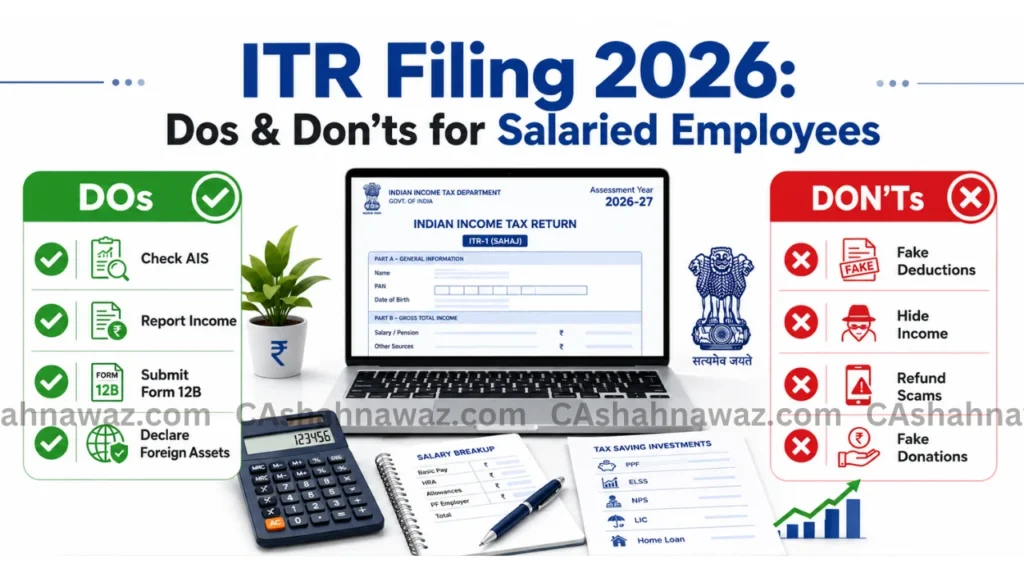
6. The Ultimate Dos and Don'ts
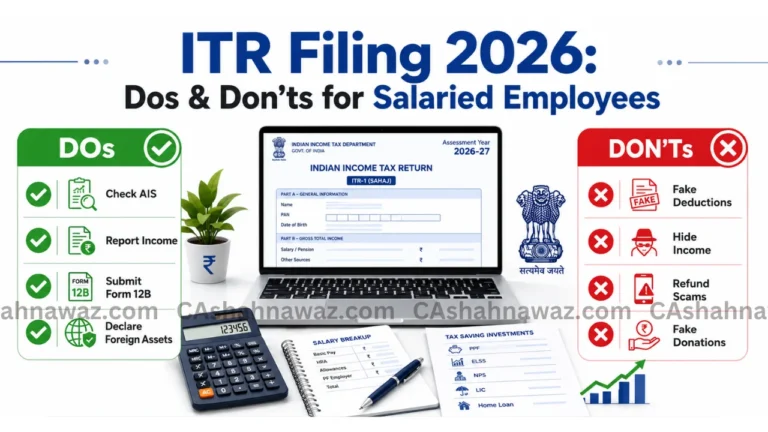
✓ DO THIS
- Check your AIS: Always download your Annual Information Statement from the tax portal before filing. Ensure all your bank interest and dividends match.
- Submit Form 12B: If you change jobs, immediately give your new HR your salary and TDS details from your old job to avoid year-end tax shocks.
- Use Corporate NPS: Legally save tax by routing money through your employer into the National Pension System (Section 80CCD(2)), which works perfectly even in the New Tax Regime.
- Report Foreign Shares: Carefully fill out Schedule FA if you hold any MNC stocks, ESOPs, or foreign accounts.
✗ AVOID THIS
- Never Fake Deductions: Do not invent fake rent receipts or claim ₹1.5 Lakh under 80C without actual proof. The system will catch you.
- Say No to Refund Agents: Avoid unverified "consultants" who ask for a 20% to 50% cut of your tax refund. They take the commission, but you face the legal penalty alone.
- Don't Do Fake Donations: Stay far away from hawala schemes involving unregistered political parties (RUPPs). The 200% penalty will bankrupt you.
- Don't Ignore Old Mistakes: If you hid income last year, fix it now with an Updated Return (ITR-U) before the tax department sends a legal notice.