ITR Filing for Content Creators & Influencers
1. Introduction
If you are a Content Creator or Social Media Influencer and started earning in India, this article is for you.
What was once considered a hobby is now a multi-billion-dollar creator economy. From YouTube vloggers and Instagram influencers to Substack writers and Twitch streamers, the avenues for digital monetisation are endless. However, as your subscriber count and ad revenue grow, so do your tax liabilities.
ITR filing for Content Creators is no longer optional; it is a critical pillar of your digital business. Whether you are generating AdSense revenue, securing lucrative brand endorsements, or selling online courses, the Income Tax Department requires strict compliance, transparent bookkeeping, and accurate reporting.
Unfortunately, tax compliance is often the most neglected aspect of a creator's journey. Many digital entrepreneurs struggle with classifying their income, understanding the complexities of GST on foreign remittances (like YouTube AdSense), handling TDS deductions made by brand agencies, and claiming valid business expenses. Failing to navigate these rules can lead to hefty penalties, notice from tax authorities, and a loss of hard-earned revenue. This is why having a robust understanding of your tax obligations—or consulting a professional for ITR filing in Mumbai—is essential for the long-term sustainability of your creator business.
At Shahnawaz & Associates, Chartered Accountants, located in Jogeshwari West, Mumbai, we specialize in taxation of digital entrepreneurs. We have tailored this comprehensive guide to address the specific financial realities of YouTubers, Podcasters, Affiliate Marketers, and Influencers. By the end of this guide, you will understand exactly how to structure your income, which forms to file, and how to legally minimize your tax burden.
2. Types of Services & Income Covered

The term "Content Creator" is a broad umbrella. The tax treatment of your revenue depends heavily on the source and nature of the income. Below are the primary income streams covered in this guide:
A. Ad Network Revenue (Platform Monetization)
- Real-World Example 1: A YouTuber earning monthly AdSense payouts deposited directly by Google Ireland into their Indian bank account.
- Real-World Example 2: A tech blogger earning revenue through programmatic banner ads via Mediavine or Ezoic.
- Real-World Example 3: A Twitch streamer generating income through pre-roll and mid-roll platform ads.
B. Brand Deals & Sponsorships (Influencer Marketing)
- Real-World Example 1: An Instagram fashion influencer charging ₹50,000 for a dedicated Reel and Story integration for a skincare brand.
- Real-World Example 2: A finance podcaster reading a 60-second ad slot for a stock-broking app during their episode.
- Real-World Example 3: A tech reviewer receiving free "PR Packages" (laptops, phones) in exchange for an unboxing video (these are taxable as perquisites!).
C. Affiliate Marketing Commissions
- Real-World Example 1: A product reviewer placing Amazon Associates links in their video description and earning a 5% commission on sales.
- Real-World Example 2: A software tutorial creator earning recurring monthly revenue from SaaS platforms (like Webflow or Canva) via referral links.
D. Direct Fan Support & Crowdfunding
- Real-World Example 1: Revenue generated from YouTube SuperChats, Super Stickers, or Channel Memberships.
- Real-World Example 2: Monthly recurring subscriptions via Patreon or BuyMeACoffee.
E. Digital Products, Merch, & Online Courses
- Real-World Example 1: A fitness influencer selling a downloadable 30-day workout PDF or a proprietary meal plan.
- Real-World Example 2: An educator selling high-ticket cohort-based courses via platforms like Teachable or Graphy.
- Real-World Example 3: Selling custom channel merchandise (hoodies, mugs) through a print-on-demand service.
F. Content Subscriptions
- Real-World Example 1: A journalist or industry expert earning subscription fees via a paid Substack newsletter.
3. Who Should File: Applicability
The requirement for ITR filing for Content Creators applies across various business structures. Your filing obligations trigger based on your total income and legal entity type:
- Individuals & Freelancers (Sole Proprietors): You must file an ITR if your gross total income (before deductions) exceeds the basic exemption limit (₹4,00,000 under the New Tax Regime for FY 2024-25/AY 2025-26). Even if your income is below this limit, filing is highly recommended to claim TDS refunds (e.g., TDS deducted by brand agencies) and build a financial track record for visas and loans.
- Partnership Firms & LLPs: If multiple creators collaborate and form a legally registered Partnership or Limited Liability Partnership (LLP), the entity must file an ITR irrespective of profit or loss.
- Private Limited Companies: Large-scale OTT creators, major YouTube channels, and gaming syndicates often incorporate as Private Limited Companies to manage heavy operational costs, employee payrolls, and equity. Companies must file their ITR annually, face mandatory statutory audits, and pay corporate tax rates.
4. Which ITR Form to Use
Selecting the correct ITR form is the first technical step in your tax journey. Filing the wrong form renders your return defective.
| Entity Type / Income Scenario | Correct ITR Form | Reason for Selection |
|---|---|---|
| Individual (AdSense treated as "Other Sources") | ITR-2 | Used only if the creator treats small, sporadic YouTube/Blog income as "Income from Other Sources" and has no other business income. (Not recommended for serious creators). |
| Individual / Proprietor (Regular Books of Accounts) | ITR-3 | The most common form for professional creators. Used when income is treated as "Profits and Gains of Business or Profession" (PGBP). Allows claiming all actual business expenses (equipment, travel, software). |
| Individual / Proprietor (Presumptive Taxation) | ITR-4 (Sugam) | Used when the creator opts for Presumptive Taxation under Section 44AD or 44ADA, declaring a fixed percentage of gross receipts as profit without maintaining detailed daily expense books. |
| Partnership Firm / LLP | ITR-5 | Applicable for all legally constituted partnership firms and LLPs running a content creation or influencer agency. |
| Private Limited Company | ITR-6 | Used by incorporated creator agencies, media houses, and large e-sports/gaming companies. |
5. Key Income Tax Provisions for Creators
Understanding the sections of the law that govern your income is crucial. Below are the key provisions applicable to the digital content industry.
A. Taxability of Business & Professional Income
Section 26 of the New Income Tax Act 2025 (Ref: Section 28 of the Income Tax Act 1961): This section charges income arising from any business or profession. For creators, brand deals, AdSense, and affiliate income fall squarely under this head.
B. Presumptive Taxation for Professionals
Section 58 of the New Income Tax Act 2025 (Ref: Section 44ADA of the Income Tax Act 1961): A massive relief for freelance creators and consultants. If your gross receipts are ≤ ₹75 Lakhs (subject to 95% digital receipts), you can declare straight 50% of your gross receipts as taxable profit. You do not need to maintain complex books of accounts or claim individual expenses.
C. Presumptive Taxation for Businesses
Section 58 of the New Income Tax Act 2025 (Ref: Section 44AD of the Income Tax Act 1961): If your content operation is classified purely as a business (e.g., e-commerce merch sales, trading digital goods) and your gross turnover is ≤ ₹3 Crores (with 95% digital receipts), you can declare 6% of your digital turnover as profit.
D. Depreciation on Assets
Section 33 of the New Income Tax Act 2025 (Ref: Section 32 of the Income Tax Act 1961): Allows creators to claim depreciation on capital assets used for content creation. Cameras, lighting, and microphones generally attract a 15% depreciation rate, while computers, laptops, and editing software attract a massive 40% rate.
E. Maintenance of Books of Accounts
Section 62 of the New Income Tax Act 2025 (Ref: Section 44AA of the Income Tax Act 1961): If you do not opt for presumptive taxation and your income/gross receipts exceed the specified thresholds, you are legally mandated to maintain an Income Register, Expense Register, Bank Statements, and Invoices.
F. Tax Audit Requirement
Section 63 of the New Income Tax Act 2025 (Ref: Section 44AB of the Income Tax Act 1961): If your professional receipts exceed ₹75L (or business turnover exceeds ₹3Cr/₹10Cr depending on cash limits), you must get your books of accounts audited by a Chartered Accountant.
G. Advance Tax
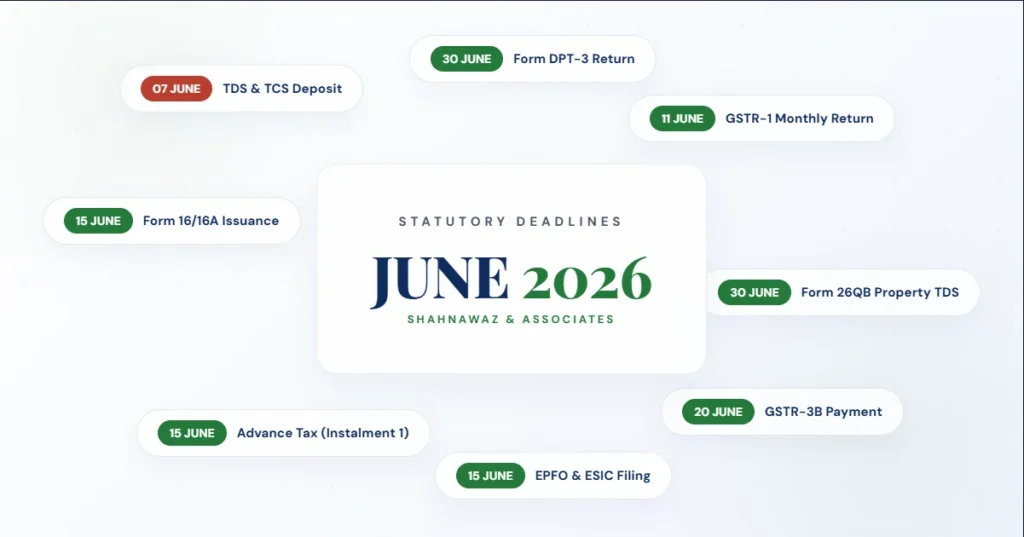
Section 404 and 408 of the New Income Tax Act 2025 (Ref: Section 208 of the Income Tax Act 1961): If your estimated tax liability for the year exceeds ₹10,000, you must pay Advance Tax in four installments (15% by Jun 15, 45% by Sep 15, 75% by Dec 15, 100% by Mar 15).
6. Old vs. New Tax Regime: Which is Better?
The eternal question for anyone looking into ITR filing for Content Creators is choosing between the Old Regime and the New Tax Regime. Let's compare the practical impacts.
| Provision | New Regime 2025 (Old Act 1961 Ref: Sec 115BAC) | Practical Impact for Content Creators & Influencers |
|---|---|---|
| Basic Exemption Limit | ₹4,00,000 | Higher baseline exemption. Zero tax payable for total income up to ₹12,00,000 due to rebate. |
| Section 80C Deductions (LIC, PPF, ELSS) | Not Allowed | Creators who reinvest heavily in their business rather than locking money in PPF/LIC benefit from the New Regime. |
| Section 80D (Health Insurance) | Not Allowed | If you pay high medical insurance premiums, you lose this deduction under the New Regime. |
| Standard Deduction | Allowed (₹75,000) for Salaried/Pensioners. Note: Not applicable to Business/Professional income. | As a creator filing business income, you rely on actual business expenses or Presumptive (50%) deductions, independent of this. |
| Business Expenses (Under ITR-3) | Allowed | CRITICAL: Even under the New Regime, if you file ITR-3, you CAN still deduct all your business expenses (camera, rent, internet) from your gross receipts. |
Recommendation for Creators
If you are an individual creator utilizing Section 44ADA (Presumptive Taxation at 50%), and you do not have heavy investments in traditional tax-saving instruments (like ₹1.5L in 80C and ₹50k in NPS), the New Tax Regime is almost always more beneficial due to the lower, wider tax slabs. However, if you are filing ITR-3 with massive actual business expenses, consult your CA to run a comparative calculation before filing.
7. TDS Applicability for Content Creators
TDS (Tax Deducted at Source) is heavily prevalent in the influencer marketing space. Brands will deduct a percentage of your fee before paying you. Conversely, if you are a large creator hiring editors, you must deduct TDS before paying them.
| Nature of Payment | New 2025 TDS Section 393(1) Reporting Code | Rate of TDS | Threshold Limit (Per Year) | Old 1961 Section (For Ref) |
|---|---|---|---|---|
| Professional/Technical Fees (Brand deals, influencer marketing, consulting) | 1027 (194J) | 10% | ₹30,000 | Sec 194J |
| Contractual Work (Hiring freelance video editors, thumbnail designers, production crew) | 1024 (194C) | 1% (Individual) 2% (Company) | ₹30,000 single bill or ₹1,00,000 aggregate | Sec 194C |
| E-commerce Transactions (Selling merch/courses via platforms like Amazon or Teachable) | 1035 (194O) | 1% | ₹5,00,000 | Sec 194O |
| Freebies & PR Packages (Laptops, cosmetics, trips provided by brands for promotion) | 1033/1034 (194R) | 10% | ₹20,000 | Sec 194R |
Pro-Tip: Always reconcile your books with your Form 26AS and AIS (Annual Information Statement) to ensure you claim credit for every rupee of TDS deducted by brand agencies.
8. GST Applicability & Practical Issues
While Income Tax applies to your profits, GST applies to your revenue (Gross Receipts). GST is often the most confusing compliance area for digital creators.
A. GST Registration Applicability & Thresholds
For service providers (which includes YouTubers, Influencers, and Podcasters), GST registration becomes mandatory once your gross revenue in a financial year exceeds ₹20 Lakhs (₹10 Lakhs in special category states). It is vital to note that this ₹20 Lakh limit includes all streams of income combined: AdSense + Brand Deals + Affiliate + Merch. Even if your domestic brand deals are only ₹5 Lakhs, but your YouTube AdSense (foreign income) is ₹16 Lakhs, your total is ₹21 Lakhs, triggering mandatory GST registration.
Furthermore, if you export services (like receiving AdSense from Google Ireland), voluntary registration is highly recommended so you can file a Letter of Undertaking (LUT) to export services at 0% GST, while simultaneously claiming Input Tax Credit (ITC) on your equipment purchases.
B. Practical GST Issues and Common Mistakes
A massive compliance hurdle for the creator industry is invoicing and the "Place of Supply" rules. Domestic brand deals attract 18% GST (SAC Code 9983). A common mistake influencers make is absorbing the GST out of their quoted fee. If your fee is ₹1,00,000, you must invoice the brand for ₹1,00,000 + 18% GST = ₹1,18,000.
Another frequent error is confusing IGST and CGST/SGST. If you (the creator) are based in Mumbai, Maharashtra, and the brand agency is in Delhi, you must charge IGST. If the agency is also in Maharashtra, you charge CGST + SGST. For foreign sponsorships and AdSense, you must ensure you receive a Foreign Inward Remittance Certificate (FIRC) from your bank to prove to the GST department that the funds came in convertible foreign exchange, legitimizing your 0% export status.
C. Interaction Between GST and Income Tax
The Income Tax Department and GST networks are deeply integrated. The turnover you declare in your GST Returns (GSTR-1 and GSTR-3B) must flawlessly match the gross receipts declared in your ITR filing. If your GST turnover says ₹40 Lakhs, but you file an ITR declaring only ₹25 Lakhs, you will automatically trigger an AI-driven scrutiny notice from the tax department.
Additionally, proper GST compliance allows you to claim Input Tax Credit (ITC). If you buy a camera for ₹2,00,000 + 18% GST (₹36,000), you can use that ₹36,000 to offset your GST liability on brand deals, effectively reducing the cost of your equipment. For seamless ITR filing in Mumbai, ensure your CA reconciles your 26AS, AIS, and GST portals before finalizing your balance sheet.
9. Common Deductions & Tax-Saving Opportunities
If you file under ITR-3, you can legally lower your taxable income by deducting expenses incurred wholly and exclusively for your content creation business.
Depreciation on Equipment
Reference: Section 33 of the New Income Tax Act 2025 (Ref: Section 32 of the 1961 Act).
Examples: Cameras, lenses, lighting grids, tripods, gaming consoles (15%). Laptops, PCs, hard drives, servers (40%).
Software & Subscriptions
Adobe Creative Cloud, Final Cut Pro, Canva Pro, Epidemic Sound, Notion, ChatGPT Plus, web hosting fees.
Production & Freelancer Costs
Payments made to video editors, thumbnail designers, scriptwriters, and managers/agencies. (Ensure TDS is deducted if applicable!)
Rent & Utility Expenses (Home Office)
If you operate out of your home, you can claim a proportionate deduction for rent, electricity, and high-speed internet bills corresponding to the square footage of your studio setup.
Travel & Accommodation
Flights, Ubers, and hotel stays specifically for filming vlogs, attending VidCon/Creator summits, or meeting brand executives.
Props, Wardrobe, & Makeup
Items purchased exclusively for a shoot (e.g., a specific costume for a sketch comedy video, or a tech gadget bought purely for review and giveaway) can be expensed. Regular daily clothing cannot be claimed.
10. Important Deadlines & Compliance Calendar
Missing deadlines results in strict penalties under Section 234A/B/C. Keep this calendar handy.
| Compliance Type | Due Date | Consequence of Default / Late Filing |
|---|---|---|
| Filing ITR (Non-Audit Cases) | Aug 31st (FY 2025-26 onwards) | Late fee up to ₹5,000 under Sec 234F + inability to carry forward business losses. |
| Filing ITR (Audit Cases) | October 31st | Penalty of 0.5% of turnover (max ₹1.5 Lakhs) under Sec 271B. |
| Advance Tax (1st Installment) | June 15th | 1% interest per month under Sec 234C on the shortfall. |
| Advance Tax (2nd Installment) | September 15th | 1% interest per month under Sec 234C. |
| Advance Tax (3rd Installment) | December 15th | 1% interest per month under Sec 234C. |
| Advance Tax (4th Installment) | March 15th | 1% interest per month under Sec 234B/C. |
| GST Returns (GSTR-3B) | 20th of next month | Late fee of ₹50 per day + 18% interest on tax due. |
11. 5 Important Case Laws Every Creator Should Know
The legal framework is evolving alongside the creator economy. Here are 5 precedents that shape how tax applies to digital influencers:
1. Shilpa Shetty vs. ACIT
Forum: ITAT, Mumbai
Key Issue: Whether income from brand endorsements and appearances is classified as professional income.
Decision & Reasoning: The Tribunal held that modeling, brand endorsements, and public appearances require specific skills and thus qualify as professional income, not just generic business income.
Practical Takeaway for Creators: Brand endorsements and influencer shoutouts are legally recognized as professional services, making you eligible to utilize Section 44ADA (50% presumptive taxation).
2. Priyanka Chopra vs. DCIT
Forum: ITAT, Mumbai
Key Issue: Taxability of high-value gifts (cars, jewelry) provided by brands or producers.
Decision & Reasoning: The Tribunal ruled that "gifts" received in the course of exercising a profession are not personal gifts out of love and affection; they are perquisites arising from professional standing and are fully taxable.
Practical Takeaway for Creators: PR packages, free laptops, and sponsored luxury trips are taxable income. Brands will now deduct 10% TDS under Sec 194R on such freebies.
3. ITO vs. Yashovardhan Tyagi (Representative Concept)
Forum: ITAT (Various similar rulings on AdSense)
Key Issue: Classification of internet advertising revenue (AdSense).
Decision & Reasoning: Income derived systematically from running a blog/website and displaying ads is an organized commercial activity and constitutes Business/Professional Income, not merely "Income from Other Sources."
Practical Takeaway for Creators: You must declare your YouTube/Blog AdSense as business income, which allows you to claim all your equipment and internet expenses against it.
4. DIT vs. Panacea Biotec Ltd (Representative on Affiliate/Commission)
Forum: Delhi High Court
Key Issue: Treatment of marketing and referral commissions.
Decision & Reasoning: Referral commissions earned routinely form part of business turnover and are subject to standard PGBP (Profits and Gains from Business) rules and TDS provisions.
Practical Takeaway for Creators: Amazon affiliate income or SaaS referrals must be meticulously tracked as business income, and it counts towards your ₹20 Lakh GST registration threshold.
5. CIT vs. BPL Limited (Representative on Depreciation)
Forum: Supreme Court
Key Issue: Eligibility of higher depreciation rates on specialized technological equipment.
Decision & Reasoning: The courts have continuously upheld that devices functioning fundamentally as computers or specialized tech (like heavy editing servers) are eligible for the higher 40% depreciation block compared to general plant & machinery (15%).
Practical Takeaway for Creators: Ensure your CA classifies your high-end editing laptops, gaming rigs, and storage servers correctly to claim the massive 40% depreciation tax shield.
12. Common Mistakes & How to Avoid Them
When handling ITR filing for Content Creators, tax officers frequently spot these recurring errors:
13. Practical Checklist Before Filing ITR
Before sitting down with your CA or logging into the tax portal, ensure you have gathered the following:
14. Conclusion & Call to Action
The creator economy is maturing rapidly, and tax authorities are paying close attention to the digital space. Proper ITR filing for Content Creators is not just about avoiding penalties; it's about professionalizing your passion, protecting your margins, and setting up a clean financial foundation that allows you to scale, secure loans, and travel internationally without visa rejections.
Navigating the web of Presumptive Taxation, GST on exports, and claiming complex depreciations can be overwhelming when you should be focusing on writing scripts, shooting videos, and engaging with your audience. You don't have to do it alone.
If you are looking for expert, hassle-free ITR filing in Mumbai, the team at Shahnawaz & Associates, Chartered Accountants is here to help. Located in Jogeshwari West, Mumbai, we understand the specific nuances of the digital creator industry and offer tailored tax structuring, GST compliance, and accounting services.
Ready to Secure Your Digital Business?
Navigate Presumptive Taxation, GST on exports, and complex depreciations with confidence. Contact our creator-focused tax experts today for professional ITR filing and compliance services.
Schedule a Consultation