
September
Income Tax · GST · MCA · TDS · Other Regulatory Compliance September 2026 Important Due Dates A simple, easy-to-navigate calendar of every statutory deadline falling in September

Income Tax · GST · MCA · TDS · Other Regulatory Compliance September 2026 Important Due Dates A simple, easy-to-navigate calendar of every statutory deadline falling in September
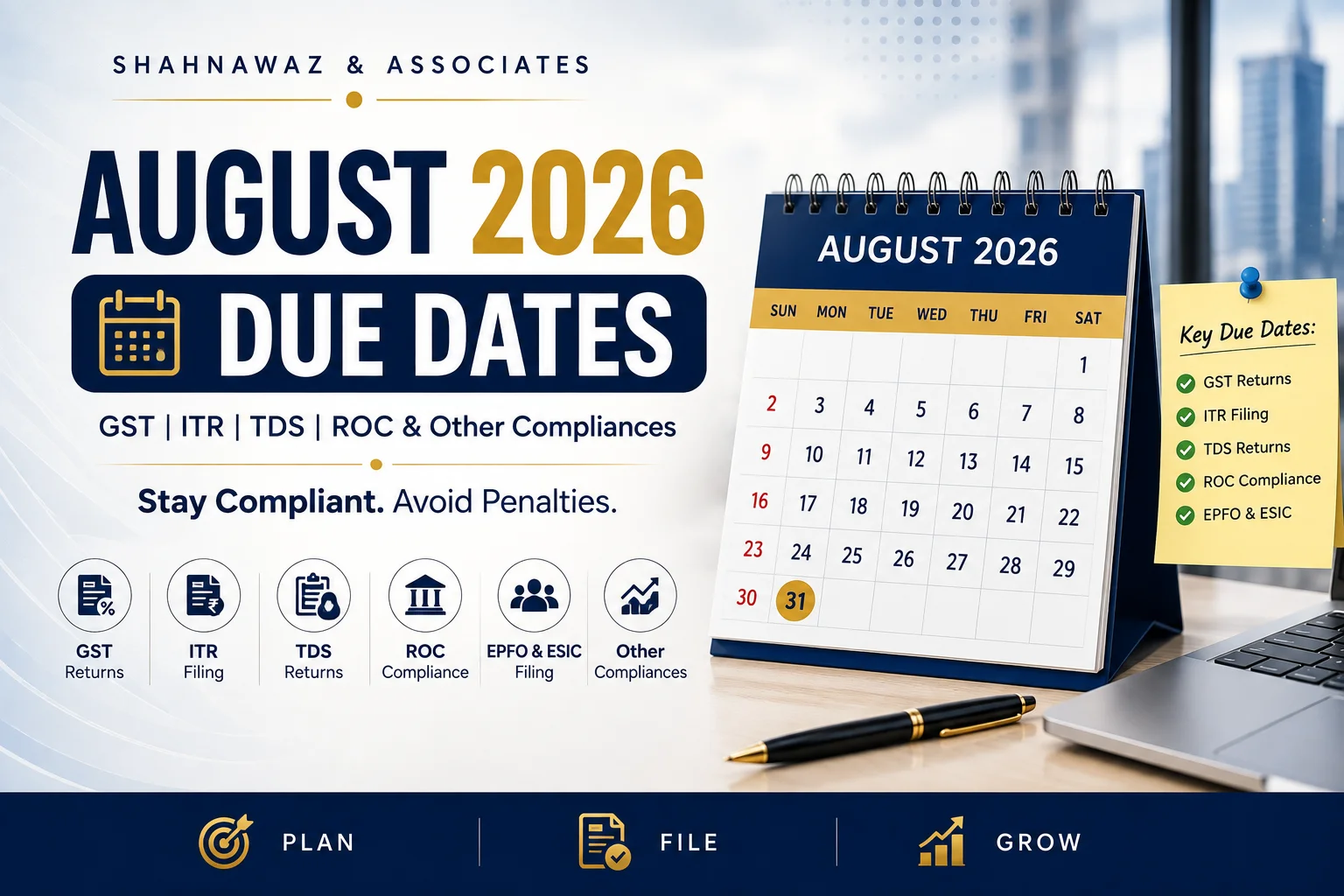
August 2026 Compliance Due Dates in India Income Tax | GST | MCA | TDS | Regulatory Compliance The August 2026 Compliance Calendar — provides all important statutory
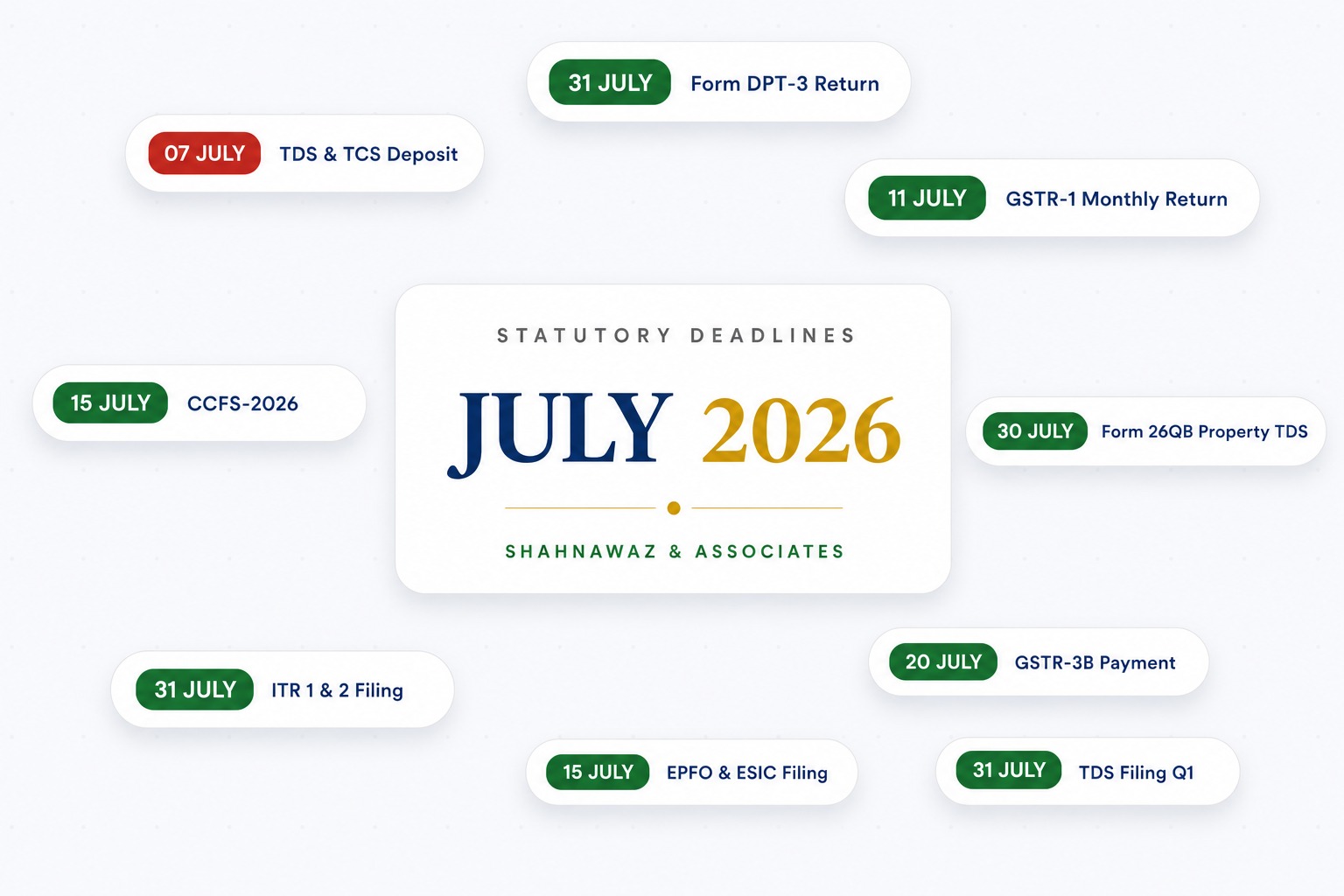
July 2026 Important Due Dates Income Tax | GST | MCA | TDS | Other Regulatory Compliance July 2026 is the most critical compliance month in India’s tax
Keeping track of income tax, GST, TDS, MCA and other statutory deadlines is essential for individuals, businesses, companies and professionals in India. Missing a compliance due date can result in late fees, interest, penalties, loss of certain tax benefits or additional regulatory complications.
The Shahnawaz and Associates Due Date Calendar brings important monthly tax and compliance deadlines together in one place. Use this page as a central reference to find the latest monthly due dates and then open the relevant month for detailed filing requirements, forms, payment deadlines and compliance categories.
The monthly calendars published by Shahnawaz and Associates cover a range of commonly applicable Indian tax and regulatory obligations, including:
Important income tax deadlines may include income tax return filing, advance tax instalments, tax payments, audit-related requirements and other applicable income-tax compliances.
The exact deadline depends on the taxpayer’s status, nature of income, applicable provisions and whether the taxpayer is subject to tax audit or other reporting requirements.
GST-registered businesses may have recurring filing and payment obligations such as GSTR-1, GSTR-3B and other GST-related returns or statements.
The applicable due date can vary depending on the taxpayer’s registration, filing frequency, scheme and other applicable conditions.
Businesses and other persons responsible for deducting or collecting tax may need to deposit TDS or TCS within the prescribed time and complete the related return or statement filing requirements.
Keeping track of both payment and return-filing deadlines is important because these are separate compliance obligations.
Companies and LLPs may have additional compliance requirements under the Companies Act, LLP Act and related regulatory frameworks.
Depending on the entity and applicable circumstances, these may include annual filings, director-related compliances, declarations, event-based filings and other statutory forms.
Eligible employers may also have recurring obligations relating to provident fund, ESI and other employment-related statutory compliances.
The applicable deadlines depend on the nature of the establishment and the relevant registration or regulatory requirement.
Some compliance deadlines occur regularly during the year. However, the actual due date can change because of government notifications, extensions, taxpayer categories or changes in applicable law.
Common recurring compliance dates include:
MCA annual filing deadlines: Depend on the entity type, financial year and applicable statutory requirements
These dates are provided as general guidance. Always check the detailed monthly calendar and the latest notification applicable to your particular compliance.
Tax and regulatory compliance is not limited to filing a return before its deadline. Businesses often need to complete several connected activities before the final filing date, including collecting documents, reconciling accounts, verifying transactions, calculating tax liability and reviewing supporting information.
A compliance calendar helps taxpayers and businesses:
For businesses with multiple registrations or compliance requirements, maintaining a monthly checklist can make the compliance process considerably easier.
Start by selecting the month you want to review. Each monthly calendar provides a detailed list of important compliance dates along with the relevant form, compliance category and applicable description.
Before acting on any deadline, consider whether the requirement applies to your specific taxpayer or business category. Not every deadline applies to every taxpayer.
Where a deadline has been extended or modified by a government notification, the latest applicable notification should be considered.
Tax and regulatory due dates can change because of notifications, circulars, legislative amendments, court decisions, technical issues on government portals or extensions granted by the relevant authorities.
The information on this page is intended for general informational purposes and should not be treated as personalised tax or legal advice.
Taxpayers should verify the applicable deadline and requirements for their specific circumstances before making a filing or payment.

You can use this page as the central monthly due-date calendar and select the relevant month to view detailed income tax, GST, TDS, MCA and other compliance deadlines.
No. Due dates can differ based on the taxpayer's category, nature of business, turnover, GST scheme, audit applicability, entity type and specific compliance requirement.
Not necessarily. GST filing deadlines may vary depending on the type of return, filing frequency, taxpayer category and applicable scheme.
Yes. Government authorities may extend certain statutory deadlines through notifications or other official announcements. Always verify the latest applicable deadline before filing or making a payment.
Depending on the type of compliance, a delay may result in late fees, interest, penalties or other consequences. The impact depends on the specific return, payment or statutory requirement involved.
The monthly calendar is updated as new monthly compliance pages are published and relevant information becomes available. Users should also check the latest official notifications for any subsequent changes or extensions.
The calendar focuses primarily on major Indian central tax and regulatory compliances. Certain state-specific, sector-specific or registration-specific obligations may have separate deadlines.
As a business consultant, we focus on delivering quantifiable results for our customers, based on a well tested methodology and solid experience.
Copyright ©2026 Shahnawaz And Associates. All rights reserved.
Don’t forget your FREE Enquiry! Fill your details here & we’ll reach you soon!”